Police thought they were responding to an assault call, but when they arrived on scene, they found two best friends dead. Now, more than 30 years later, authorities have finally made an arrest. The Larry Loehr and Eugene Cates case has raised questions from the start. Even with an arrest, investigators still haven’t released some of the biggest answers in this case.
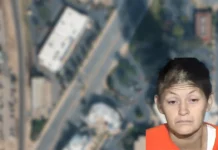
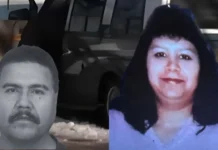
On May 23, 1994, Stockton, California, police responded to the Spanos Park construction site at the 10000 block of Thornton Road after they received a call about an assault at 3:00 in the morning. When officers arrived, they found 23-year-old Lawrence “Larry” Loehr and 23-year-old Eugene Cates dead. Larry had been working as a security guard overnight at the construction site. Eugene had just finished his shift at the Chevron station nearby and had stopped in to talk to Larry.
Larry and Eugene were lifelong friends. Both were criminal justice students at San Joaquin Delta College, and both hoped to work in law enforcement. Larry had taken the entrance exam for a Stockton Police Department training program. Eugene had passed the test to become a state corrections officer. He was waiting on his background check to come back so that he could take his first assignment.
The crime scene itself raised questions from the very beginning. Investigators found Larry inside a security trailer. Someone had bound and gagged him, then shot him once in the back of the head. Investigators found Eugene outside near a chain-link fence, underneath a section that a car appeared to have knocked down. Early on, police could not tell whether someone had shot him or a the car had run over him. The district attorney’s office now says that Eugene died from a fatal stab wound. The killer used Eugene’s own vehicle to crash through the fence and leave the site. About two hours later, investigators found the car abandoned and burned about three miles away.
This is where the questions start, because analytically there are only a couple of ways this seems to make sense. One possibility is that Larry and Eugene were inside the trailer talking when the killer came in. An altercation started, something happened, and someone tied up Larry, gagged him, and shot him. While that was happening, Eugene may have run out toward the car, trying to get away. Then the killer could have run after him, stabbed him, and fled in Eugene’s car.
The second possibility is that someone attacked Eugene first outside. Maybe Larry heard it, or maybe he opened the trailer door and saw something. Then the killer went to Larry, killed him inside the trailer, got into the car, and left. Those two scenarios fit the known facts best based on what officials have said publicly. Still, officials have not fully explained the order of events, and that uncertainty has made this case haunting for decades.
The district attorney’s office said these crimes took place sometime between 1:00 in the morning and 2:48 in the morning. Someone called the police and they responded around 3:00 in the morning. That opens up another major question, and it is a big one: who called 911? It could be argued that Larry or Eugene made the call, especially because there was almost a two-hour window. But given how they were killed, that does not seem plausible. So who else called? Did someone hear what was happening and called? Was it someone who walked by after it happened? Was it the attacker himself?
That information has not been released, and it may be something that does not come out until trial. If investigators don’t know who called 9-1-1. That could explain part of why this case sat cold for more than 30 years. It could answer one of the biggest missing pieces. For now, that remains one of the clearest unanswered questions in the Larry Loehr and Eugene Cates investigation.
Investigators collected evidence and conducted interviews with family, friends, and potential witnesses, but they were never able to make an arrest or even name a suspect. They could find no connection between Larry, Eugene, and the construction site. This was also 1994, so DNA technology was not where it is today. The current district attorney reiterated that the person responsible had no known connection to either victim or to the construction site. He also said investigators found no sign that anyone had taken anything, so they ruled out robbery.
That leads to another question people are going to ask. If the killer stole Eugene’s car and left in it, then how was robbery not the motive? There are reasons that can still make sense. When someone steals a car just to steal it, they may take it to sell for parts, joyride in it, or wreck it. This looks more like concealment. Two people found dead at a construction site. The stolen car found a few miles away and burned. This points to an effort to destroy any evidence that could tie the killer to the scene.
Even with that explanation, the motive is still unclear. What happened that night? Was there an altercation? Were Larry and Eugene targeted for some reason? Or was this something random? There still has to be something missing from the public version of this case, and it feels likely that much more will come out if it goes to trial.
The major break came in 2025. Credit goes back to the original investigative team. They collected evidence and preserved it well enough that they tested more than 30 years later. The San Joaquin County Cold Case Task Force submitted the original evidence for forensic DNA testing and forensic genetic genealogy. An Othram lab said that the testing helped generate new investigative leads. Investigators identified Donald Lee Clark as a potential contributor of the DNA from the crime scene.
Exactly how investigators identified him has not been released. What is known is that forensic genetic genealogy and modern DNA testing can work from a microscopic speck of DNA, even DNA that cannot be seen. From there, investigators can build out family tree leads and narrow down possible people. It does not guarantee that the lead is the right person, but it can point police in a direction they did not have before. The district attorney said they won’t release those details until trial in order to preserve the integrity of the investigation and the prosecution.
After Donald Lee Clark’s name came up as a potential contributor of DNA found on the evidence, investigators obtained an actual DNA sample from him. The sample matched and they officially named him as a suspect in the murders of Eugene Cates and Larry Loehr. More than 30 years after the killings, the Larry Loehr and Eugene Cates case finally moved from a cold case to an arrest.
On April 22, 2026, members of the U.S. Marshals Fugitive Task Force arrested 80-year-old Donald Lee Clark in Stockton, California. Clark faces two murder counts and two special-circumstance allegations tied to multiple murders, along with firearm and deadly-weapon enhancements. He was arraigned in the San Joaquin County Superior Court on those charges.
For Larry and Eugene’s families, the arrest does not undo what happened, and it does not bring them back. But it does move the case forward after decades with no answers, and maybe that can bring some kind of closure. Eugene’s sister, Donna Whitlatch, told the Stockton Record that her brother’s death robbed her of everything. She described him as a good kid and said she would have given her life for him.
This case is even harder to sit with when you look at who Larry and Eugene were when someone killed them. These were two young men with their whole lives ahead of them. They were engaged and planning futures with the women they intended to marry. Instead, their families buries these two lifelong friends next to each other.
Donald Lee Clark is being held in the San Joaquin County Jail without bail. The district attorney’s office said that they are pursuing the death penalty and life without parole. His next scheduled court date is June 1, 2026. The DA’s office has said they consider this case solved. At the same time, Donald Lee Clark is presumed innocent until proven guilty in a court of law.
I will bring you updates as they become available.
Connect with CRIMEALYTICS®
For more CRIMEALYTICS® case analysis, updates, and missing-person coverage, subscribe on YouTube, listen on your favorite podcast app, follow @crimealtyics on social media, or submit a case suggestion.