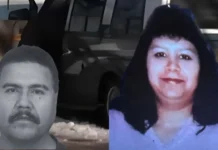
Delores Thompson case update: A 23 year old woman was found deceased in the Frederick, Maryland, apartment she shared with a friend on South Market Street. Nearly four decades later, modern DNA testing identified the person police say was responsible.
Dolores was a babysitter who had agreed to babysit for someone on Monday, February 1, 1988. She was last seen late Sunday afternoon, January 31. When Delores did not show up for the babysitting job, the woman’s boyfriend and his sister went to check on her at about 4:30 p.m.
They knocked on the apartment door, but no one answered, so they left. Later that day, they returned at about 8:15 that evening and noticed the door was unlocked. After entering the apartment, they found Dolores deceased on her bed.
At first, Frederick Police Chief Richard Ashton said there was nothing on Dolores’s body or around the apartment that showed how she had died. Investigators found no signs of forced entry, but they treated the scene as a homicide. Then, on Tuesday, February 2, the medical examiner determined that Dolores had been assaulted and strangled.
They did not give an exact time of death. However, the known timeline suggests the killer murdered Delores Thompson sometime after witnesses last saw her late Sunday afternoon and before someone discovered her at 8:15 p.m. Monday. It is unclear whether the apartment door was unlocked during the first visit at 4:30 p.m., whether Dolores was already deceased, or whether someone entered after that visit.
They ruled Dolores’s roommate out early because he was in the hospital before, during, and after the homicide. Hospital staff initially tried to keep the news from him because they did not want to raise his heart rate or cause him stress. Eventually, his daughter and Corporal Barry Horner told him about Dolores’s death because police needed to speak with him.
The news upset him and he described Dolores as someone who loved living life. She was a people person, and could make friends with almost anyone. He said he had no idea who would have harmed her, although he believed police would solve the case. After leaving the hospital, he stayed with his daughter and said he did not plan to return to the apartment.
Police interviewed family members, friends, the roommate, and people known to have come and gone from the apartment in the days before Dolores’s death. They sent the evidence collected at the scene for testing that was available in 1988. Yet DNA technology, computer systems, and investigative tools were far more limited at that time, and the case eventually went cold.
However, investigators never stopped working the Delores Thompson Case. On November 28, 2025, Frederick police announced they had re-examined the evidence collected in 1988. Crime scene specialist Sabrina Swann identified a small section of bedding that had never been sent for testing.
More from CRIMEALTYICS®: Wilkinsburg Jane Doe Identified
Modern testing produced a DNA profile suitable for comparison through state and national CODIS databases. Investigators identified Calvin Ziegler as the DNA contributor. His profile was in the system because he was a convicted offender.
Original investigators had interviewed Ziegler during the 1988 investigation. They said he knew Dolores and frequently visited her apartment, although the available information does not explain how the two knew each other. The timing of the homicide raised the possibility that the person responsible knew Dolores. Her roommate was hospitalized and she may have been alone, but police did not rule out other possibilities at the time.
The Frederick County State’s Attorney’s Office reviewed the findings and issued a formal letter concluding that the evidence supported identifying Ziegler as both the DNA contributor and the person responsible for Dolores Thompson’s homicide. Ziegler died in 2010, so criminal prosecution is not possible.
The Delores Thompson Case gave her family an answer after 37 years. It also shows the value of preserving evidence, because the material collected in 1988 eventually provided the DNA evidence needed to identify the person police say killed Dolores.
View Sources for This Report
The News. “Woman’s Body Discovered in S. Market Street Home.” February 2, 1988.
View source
The Frederick News-Post. “Woman Was Sexually Assaulted, Strangled to Death, Police Say.” February 3, 1988.
View source
The Frederick News-Post. “Roommate Describes Murdered Woman.” February 6, 1988.
View source
The News. Retrospective coverage of the unsolved Delores Thompson homicide. October 3, 1995, page 1.
View source
The News. Continuation of retrospective coverage of the Delores Thompson homicide. October 3, 1995, page 4.
View source
Frederick Police Department. “Frederick Police Announce Cold Case Breakthrough in 1988 Homicide of Delores ‘Mooda’ Thompson.”
View source
Frederick Police Department. Video version of the police news release.
View source
WTOP News. “Frederick Police Say Untested Bedding Area Identified Killer in 37-Year-Old Cold Case.”
View source
Daily Voice. “Delores ‘Mooda’ Thompson Cold Case Cracked 37 Years Later.”
View source
The Baltimore Sun / FOX45 Baltimore. “Frederick Police Close 1988 Cold Case With DNA Hit From Untested Evidence.”
View source
CBS News Baltimore. “Dead Man Responsible for 1988 Maryland Cold Case Homicide, Police Say.”
View source
Connect with CRIMEALYTICS®
For more CRIMEALYTICS® case analysis, updates, and missing-person coverage, subscribe on YouTube, listen on your favorite podcast app, follow @crimealtyics on social media, or submit a case suggestion.