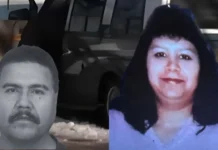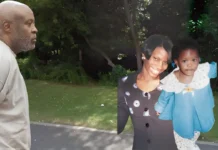
The Sarah Boone suitcase murder case began with a story that sounded like a prank that went too far. Sarah Boone told police that she and her boyfriend, George Torres Jr., were playing hide-and-go-seek, and that he climbed into a suitcase and couldn’t get out. By morning, she said, he was dead.
Investigators did not accept that explanation for long. A 911 call, witness testimony from Boone’s ex-husband, and most importantly, cellphone videos recorded during the incident shaped what happened next. The case also stretched over years, with repeated attorney changes, a late shift in defense strategy, and a fast jury verdict that ended with a second-degree murder conviction and a life sentence.
Background on Sarah Boone and George Torres Jr.
Sarah Boone was born on October 10, 1977, in Atlanta, Georgia. When she was young, her family moved to the Orlando area. She married Brian Boone in 2005, and the marriage produced one son. The couple later divorced in 2017.
George Torres Jr. was born on February 13, 1978, in Philadelphia. He grew up with nine siblings and later had three children of his own.
After her divorce, Boone met Torres at a bar near her Winter Park home. The relationship moved quickly. Within 10 months of separating from Brian Boone, Sarah Boone and George Torres Jr. moved in together.
February 23 to 24, 2020: The suitcase, the calls, and the 911 report
On February 23, 2020, Boone and Torres had been drinking. Boone later told police that they decided to play a game of hide-and-go-seek. According to her account, Torres got into a suitcase, and either zipped himself in or Boone zipped him in. Boone said she believed he could unzip it from the inside.
The next day, Brian Boone contacted Sarah Boone about picking up their son from school. Around 11:30 a.m. on the 23rd, Sarah Boone called Brian Boone, and he could tell she was intoxicated because she was slurring her words.
Then, around 12:30 p.m. on February 24, Sarah Boone told Brian Boone that George Torres Jr. had died, and she asked him to come over. She repeated the same general story: they played hide-and-seek, she fell asleep, and she forgot he was in the suitcase.
Brian Boone’s testimony captured the moment in plain terms:
Brian Boone advised her to call 911, and he said he repeated that advice. While he was on the way, Boone called again to ask if he was still coming. He told her, again, that she needed to call 911 and get someone there.
Despite those repeated prompts, the call for help did not happen until later. At about 1:00 p.m., a Winter Park 911 operator received the call from Boone at 4748 Frantz Court, Apartment 3. Boone told the operator, “My boyfriend is dead.” She then gave the same basic explanation, saying they were playing the night before, that she put him in a suitcase as part of the game, that she fell asleep, and that she woke up to find him dead inside.
The cellphone video and the interrogation that followed
When first responders arrived, they determined George Torres Jr. had been in the suitcase for almost 11 hours. Boone kept repeating her explanation, saying she fell asleep, believed he could get out, and viewed it as a prank that ended badly.
Police, however, had evidence Boone did not seem to expect: videos on her cellphone. Investigators attempted to show Boone what they found, and she refused to watch it.
The video captured Torres from inside the suitcase as he spoke to Boone. In the recording, Boone can be heard taunting him and laughing while he pleads.
What Investigators Confronted Boone With
The transcript excerpts presented in the case coverage included Boone saying:
“For everything you’ve done to me. For everything you’ve done to me. [beep] you. Sarah. [beep] you. Stupid. Sarah.”
Torres is also heard saying, “I love you.” Boone responds, “Yes. That’s what you do, you shake me.”
Investigators focused on what the recording showed versus what Boone claimed. Boone continued to insist she thought Torres could unzip the suitcase from the inside, and she repeatedly framed what happened as unintentional and not a crime. During questioning, police pressed her on the decision to leave him inside and not check on him.
Boone’s answers shifted under pressure. She ultimately admitted she went upstairs to bed and left him downstairs in the suitcase. She did not check on him. Investigators also questioned her about moving the suitcase, including whether he ended up in a position that made escape even harder. Boone reacted strongly to that line of questioning.
Police challenged her on the point that she was awake for a period of time and still did not check on him, even though he never came upstairs. Boone argued she believed he would get out because of a hole and because the suitcase did not lock, and she maintained she did not intend for him to die.
Investigators did not accept that. After the interview, Boone was arrested and charged with second-degree murder.
The Sarah Boone suitcase murder trial, the verdict, and the life sentence
The case did not move quickly to trial. It dragged on for years. Boone went through eight attorneys, seven of whom were public defenders who withdrew from the case. Along the way, she also requested hair, makeup, and specific clothes, requests the judges rejected.
By July 2024, Boone was representing herself from jail, and that did not go well. Later, she placed a handwritten ad seeking a lawyer. The ad worked, and a ninth attorney took the case. Her trial then began in 2024.
Sarah Boone’s Defense Strategy at Trial in Suitcase Murder Trial
At trial, Boone’s defense shifted. She was no longer focused only on the idea that it was an accident. Instead, she said she suffered from battered spouse syndrome and acted in self-defense. Boone claimed she feared that if she let Torres out of the suitcase, he would hurt her. She testified that she shook the suitcase and struck it with a baseball bat because she was afraid.
In her own words, Boone explained her fear and what she said she did:
“My fear was that he was going to break out of the suitcase knowing that it was a broken suitcase. I shook the suitcase trying to get his hand to go back in, shaking it, and telling him that, “Please stop doing this. Please, please stop doing this to me.” He would have made me unrecognizable, or I would have, uh, lost my life.” Source: Fox
The problem for the defense was how the cellphone video came across. In the portion discussed publicly, Torres is heard begging for help and pleading, while Boone laughs and does nothing to let him out. The prosecution argued that the recording contradicted the idea that Torres posed an immediate threat in those moments.
Even with that evidence, the prosecution offered Boone a 15-year plea deal. She rejected it. She believed she did nothing wrong, blamed Torres, and believed a jury would not convict her.
Verdict and Sentencing
The trial ended with a fast decision. In about an hour, the jury found Boone guilty of second-degree murder. The verdict was read in court on October 25, 2024, in Orlando, Orange County, Florida:
The court then polled the jurors, and each confirmed the verdict.
After sentencing, Boone received life in prison. Following that, she sent a heated letter to Judge Michael Craneck. In the letter, she criticized the court, the attorneys, the jury, the media, George Torres Jr., and his family. She continued to claim she was innocent, WESH Orlando reported. The case coverage concluded with a final point: she never took responsibility and never issued a sincere apology.
Conclusion
The Sarah Boone suitcase murder case ended with a life sentence, but it continues to draw attention because of the gap between Boone’s early explanation and what investigators said her own phone recorded.
Connect with CRIMEALYTICS®
For more CRIMEALYTICS® case analysis, updates, and missing-person coverage, subscribe on YouTube, listen on your favorite podcast app, follow @crimealtyics on social media, or submit a case suggestion.